
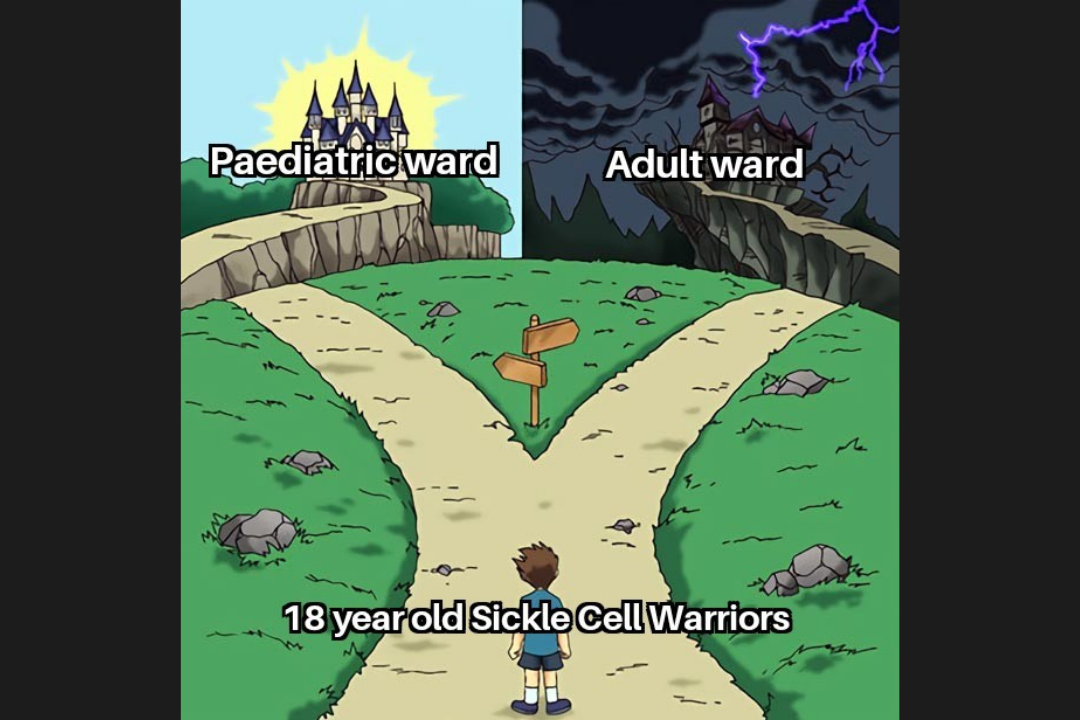
I remember the moment clearly.
I was in the adult emergency department. In pain.
And for the first time, my parents weren't there – the people who had been my memory, my voice, and my advocates my entire life.
I wanted to rise to the challenge. But nobody had warned me that the difficulty level of Adult Hospital is on a whole other level. And I was thrown in at the exact moment my support system disappeared.
Here are five things I wish someone had told me before I made that transition.
Know your medical history, your crisis pattern, your medication names and doses, what works and what doesn't. When you're in pain your thinking slows – and any hesitation can raise doubt. The more fluently you can answer questions, the more credible you become.
The first time someone implied I was exaggerating my pain, I was furious. That anger made everything harder - it disrupted my communication and made the pain worse. I wish I'd known it was coming. Not to accept it, but so it didn't blindside me when I needed to stay calm most.
For parents – the best thing you can do now is let your teenager attend routine appointments independently. Speaking for yourself, remembering your own details, navigating a clinical conversation – these are skills that need practice before the stakes are at their highest.
I walked in and thought: I shouldn't be here. Surrounded by elderly patients, I caught myself wondering – am I now in the same category? It's a quiet identity shift that nobody prepares you for. If you feel it, you're not alone. It does get easier.
My sickle cell nurse and haematologist were the turning point. Knowing there were people who understood, who were angry on my behalf, and who I could call when things got difficult – that changed how I experienced the whole system. Find yours as early as possible.
The transition is hard. But it doesn't have to blindside you the way it blindsided me.
Knowledge is the difference – and that's exactly what we're here to build.
Stay Healthy,
Lewis


