

Sickle cell disease is largely invisible to the outside world.
You can be in the middle of a severe crisis and look, to a stranger, completely fine.
No broken bone. No visible wound. No bleeding.
Just a person sitting in a waiting room, saying they're in pain.
This is where stigma does its damage.
When I first read the 'No ones listening' report I wasn't surprised.
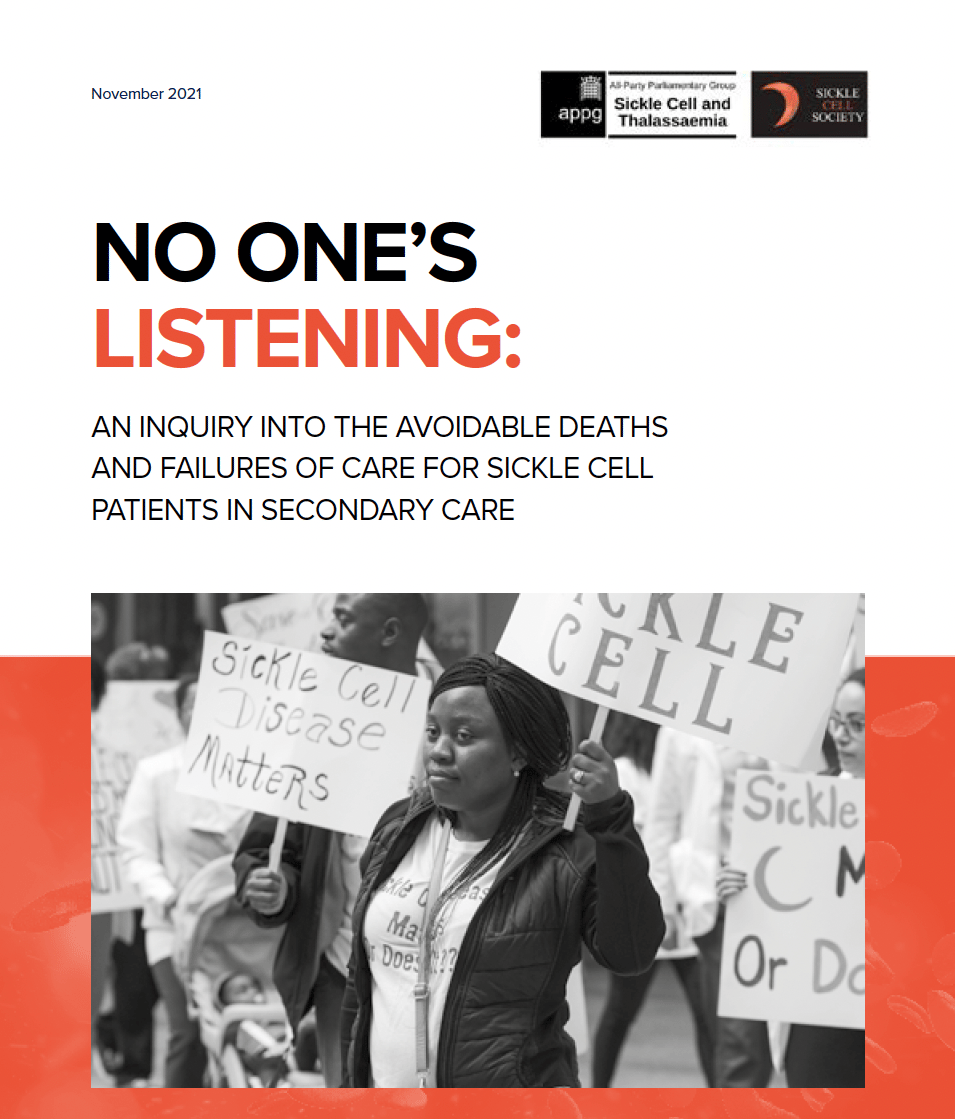
This was a 2021 UK inquiry that found poor sickle cell care had left people afraid to attend hospital. Some avoided hospital altogether despite severe pain and health deterioration.
That's not a minor finding.
That's a system so broken that the people who need it most have learned to stay away.
It's a problem not unique to the UK. It seems that no matter where in the world sickle cell patients seek urgent help they're faced with :
Because the world lacks education and awareness of Sickle Cell and the pain it can cause.
This is why ignorant medical professionals want to treat you like everyone else.
The thought process is this:
Visible sign of pain + familiar medical problem = Believe
Invisible pain + obscure unfamiliar medical problem = Doubt
Unfortunately sickle cell tends to fall into the second category.
And we know this all too well which is why sometimes staying at home feels less traumatic than attending emergency room.
I am not telling you this to validate avoiding the hospital.
I am telling you this to validate how hard the decision to go there is.
But what we have to do is separate the emotional trauma of past experience from the reality of your current medical problem.
With that in mind here a 7 non-negotiable emergency situations where hospital is a must.
Any of the following situations in association with a sickle cell crisis, go to hospital urgently.
Chest pain or shortness of breath
This is Acute Chest Syndrome until proven otherwise. It is one of the leading causes of death in sickle cell disease. Do not wait to see if it settles. Do not manage this at home.
Fever of 38°C / 100.4°F or above
People with sickle cell are at higher risk of serious infection. A fever needs assessing urgently — sepsis can deteriorate fast.
Stroke symptoms
Face drooping. Arm weakness. Speech changes. Sudden severe headache. Sudden vision changes. Any of these require an emergency call.
Priapism lasting more than 2-3 hours
This is a medical emergency that causes a prolonged painful erection. It causes permanent damage to the penis if not treated with 4 hours. Many men delay because of embarrassment. Please do not delay.
Severe pain that your usual home management is not touching
You know your pain. You know your baseline. If you have done what you normally do and isn't working after a reasonable period, that is information. Trust it.
Neurological changes
Facial dropping, one sided arm or leg weakness, speech disturbance, loss of vision. These need urgent assessment.
Signs of severe anaemia
Extreme fatigue, severe paleness, racing heart, dizziness, feeling faint. These can indicate a rapid drop in haemoglobin that needs urgent attention.
Whenever you're struggling to decide ask these three questions:
If question three is yes – go. No more deliberating. If question one or two is yes – lean toward going. Your instinct about your own body is a clinical data point.
The system has let a lot of people with sickle cell down. That's real.
But the answer to a system that has underserved you is not to stay away when you genuinely need it.
The answer is to know your non-negotiables so clearly that the decision is made without thinking.
Go in knowing what you need. Advocate clearly. And if possible, bring someone with you.
Stay Healthy,
Lewis


