
Acute chest syndrome is one of the most serious complications of sickle cell disease.
It's also sadly one of the leading causes of death in SCD.
But when recognised early it can be treated before it becomes life threatening.
The question is, would you know how to recognise it if it happened to you or your child?
Acute chest syndrome is sometimes called a chest crisis. It takes place within the lungs and results in three main symptoms:
These are the triple threat of Acute Chest Syndrome. They should each raise concern individually, but when they occur together?... Acute Chest Syndrome is surefire.
Your lungs contain millions of tiny blood vessels which allow oxygen from the air you breathe to enter your bloodstream.
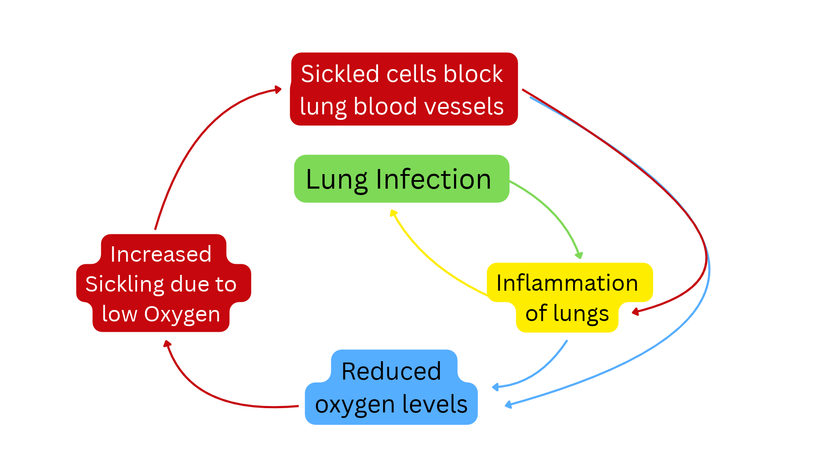
Just like sickled red blood cells can block blood vessels in your bones and joints, they can also block blood vessels in your lungs.
This can cause inflammation and damage to the lungs, making it harder for oxygen to enter your bloodstream. Chest infections can have the same effect.
The problem is that when oxygen levels drop, more red blood cells can sickle, causing further blockages and lung damage.
This creates a vicious cycle which can rapidly become life-threatening.
There are four important symptoms to look out for:
You don't need to experience all four symptoms to have acute chest syndrome.
Doctors will check your oxygen levels, arrange blood tests and usually perform a chest X-ray to look for changes in your lungs.
Treatment usually involves antibiotics to treat possible infections and supplemental oxygen if your oxygen levels are low.
Some patients may also require a blood transfusion, either a simple transfusion or an exchange transfusion. The transfused normal red blood cells help deliver more oxygen where its needed and reduce the proportion of sickled red blood cells.
In severe cases, patients may need intensive care and a ventilator to help them breathe.
That's a summary of what you must know about Acute Chest Syndrome or 'Chest Crisis' as referred to by some warriors.
I know in many cases sickle cell warriors may be reluctant to seek medical attention when in pain crisis due to poor past experiences.
But acute chest syndrome is a medical emergency, and delaying treatment can be life-threatening.
If you experience new chest pain, breathlessness or other symptoms that suggest acute chest syndrome, seek emergency hospital assessment. Don't wait till it gets worse.
Stay Healthy,
Lewis