
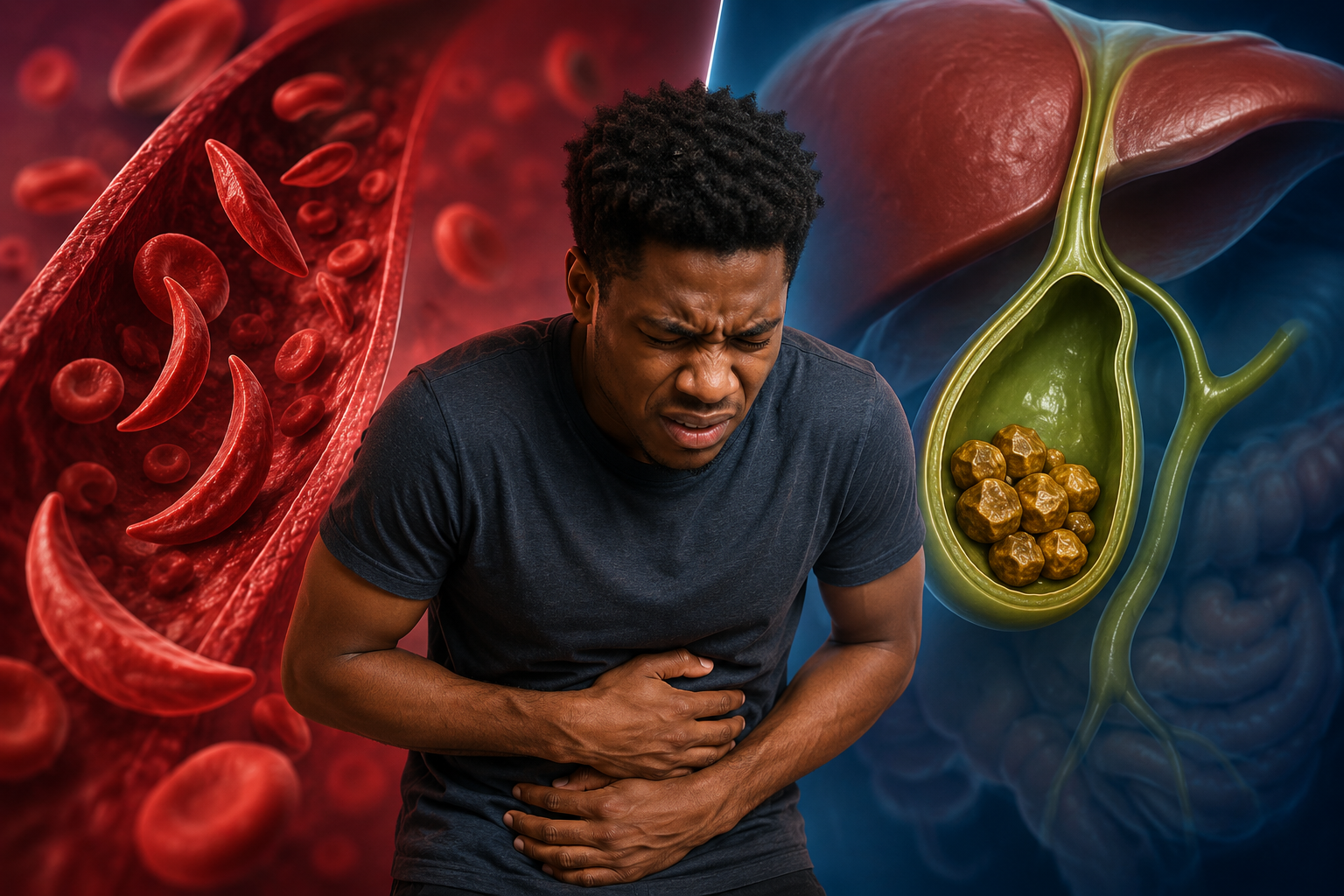
I presented a session on Gallstones in Sickle Cell to the Somebodytotalkto SCD support group.
One theme from the discussion really stood out to me.
Several people shared that they'd experienced gallstone pain and later had their gallbladder removed, but at the time they had no idea what was happening.
They didn't understand why they were doubled over in unbearable agony.
They didn't know why the gallbladder needed to come out.
All they knew was that the pain needed to be stopped by any means possible.
One of the challenges with sickle cell is that not every severe pain episode is a sickle cell crisis.
Sickle cell can also create other complications that can register pretty high on your pain scale. And these can pop up suddenly without warning as well.
One such complication worth knowing about is gallstones
Gallstones are common in sickle cell because red blood cells break down faster than usual.
This process is called haemolysis.
When red blood cells break down, they produce bilirubin.
Bilirubin is one of the components of a substance called bile that is stored in the gallbladder.
Over time, excess bilirubin can build up in the bile and form pigment stones inside the gallbladder.
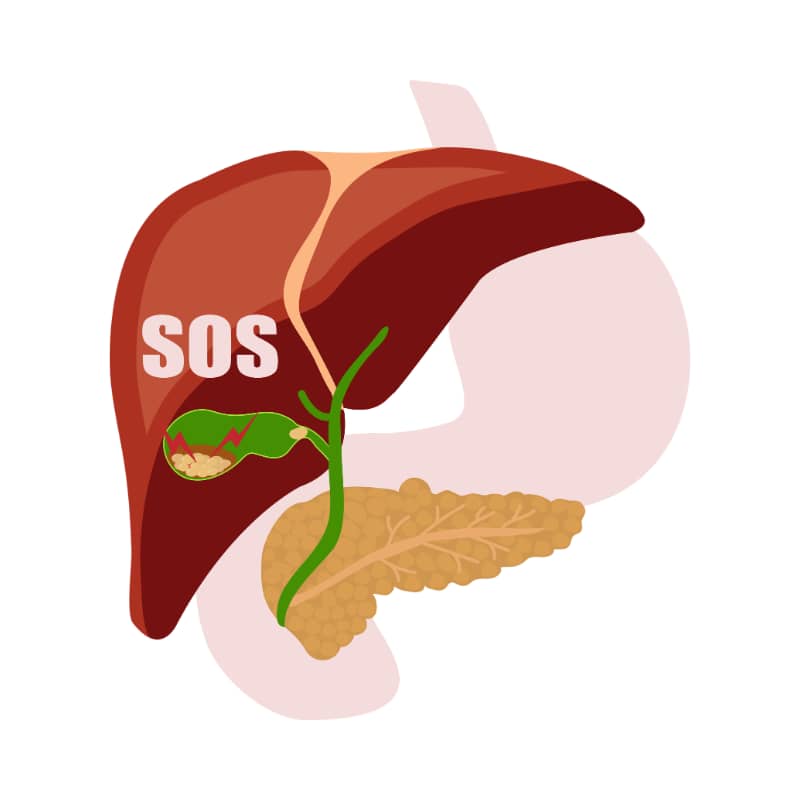
Here you can see the location of the gallbladder under the liver on the right of your abdomen.
Mostly when stones form, they just sit there minding their own business.
But sometimes they decide wander out of the gall bladder and get stuck and blocking the flow of bile. That blockage can cause severe pain, inflammation or infection.
Gallstone pain happens in the right upper part of the tummy, just under the ribs. Sometimes it can be felt in the upper middle part of the tummy too.
If the pain settles, you may not always need emergency care. But you should seek urgent medical help if you notice any of the following
If you're a parent of a sickle cell warrior, gallstones can also occur in children as young as 2 or 3 years old with sickle cell. The same symptoms and awareness applies. To learn about sickle cell emergency red flags specific to children check out my course Sickle Cell Red Flags for Parents.
You don't have to be able to self diagnose gallstones with 100% accuracy. But learning and recognising this pattern now may save you stress in the future.
In my experience as a doctor I can tell you gallstones problems are usually very easy to diagnose in a patient.
But Sickle Cell patients are more prone to have their pain neglected so here's a tip.
Tell them - 'I'm worried about gallstones'.
Then report the pain pattern and associated symptoms you feel from the lists above.
Say it feels different from your usual sickle cell pain.
I'm almost 100% sure they will arrange the appropriate tests, such as an ultrasound or CT scan for you after that.
Just remember if you have sickle cell and develop severe abdominal pain that's unusual for you, especially if:
It's in the right upper tummy, linked to food, comes with vomiting, jaundice or fever it needs hospital assessment for gallstones.
Stay Healthy,
Lewis


