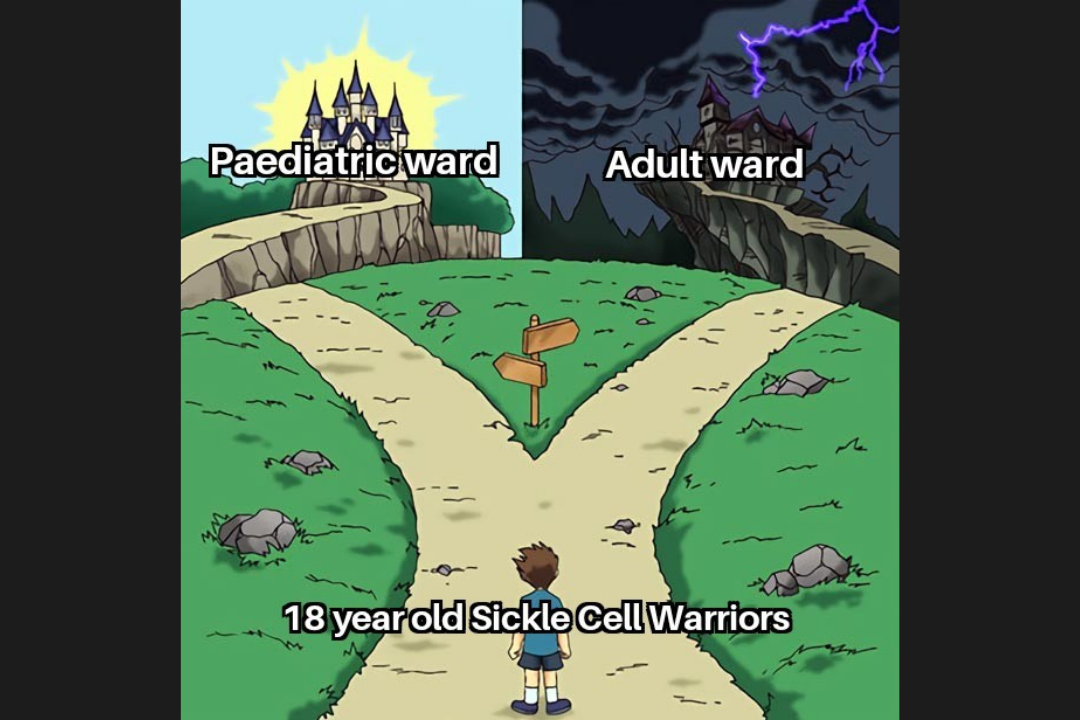

If you're an adult with Sickle Cell reading this, I'm going to take a wild guess and say that as a child you probably heard this line...
You're not going to live past your 20th birthday.
Whether it was said directly to you, relayed later by a parent, or you just kind of felt it lingering over you.
Those early messages matter more than we realise.
Because what you believe about your life expectancy shapes how you live your life. It can push you to play small, or it can push you to live fast.
Either way, it sits in the background influencing decisions about health, ambition, relationships, and the future.
When I was born, my parents were told the typical life expectancy for a child with sickle cell was somewhere in the early 20s. They never told me that.
Looking back, what I did receive instead were subtle signals: live fully, give things your all, do what matters, don't hold back.
That mindset probably played a role in me pushing myself academically and eventually getting to medical school. And there, I had another pivotal moment.
I met an adult haematologist who spoke about life expectancy very differently. She said in no uncertain terms that I was going to live a long life. Normal life expectancy. Into my 70s and beyond.
At the time, I felt well. I wasn’t thinking about dying, but I knew I'd repressed those fears deep down because I felt relieved.
Instead of having to rush through life I felt like I was back in control of my own destiny. As a young adult I needed to take sickle cell seriously longterm. That started with believing that I had a long future ahead of me.
Now here's the key point I want to share with you.
Life expectancy in sickle cell has improved dramatically over the past 50 years.
This is a fact that not all doctors have caught up on.
Because of these advances, most people living with sickle cell today can reasonably expect to live into their 60s and beyond. Many much longer.
That doesn't mean sickle cell is easy. It doesn't mean there's no challenges.
But it does mean that the old stories many of us grew up with are outdated.
So wherever those stories have lead you today, your story is still far from finished!
Because you're still alive! Gratitude and love will take you the rest of the way.
When you believe you have time, you start investing in your health differently. You start thinking long term. You start building a life, instead of living in fear.
Stay Healthy,
Lewis