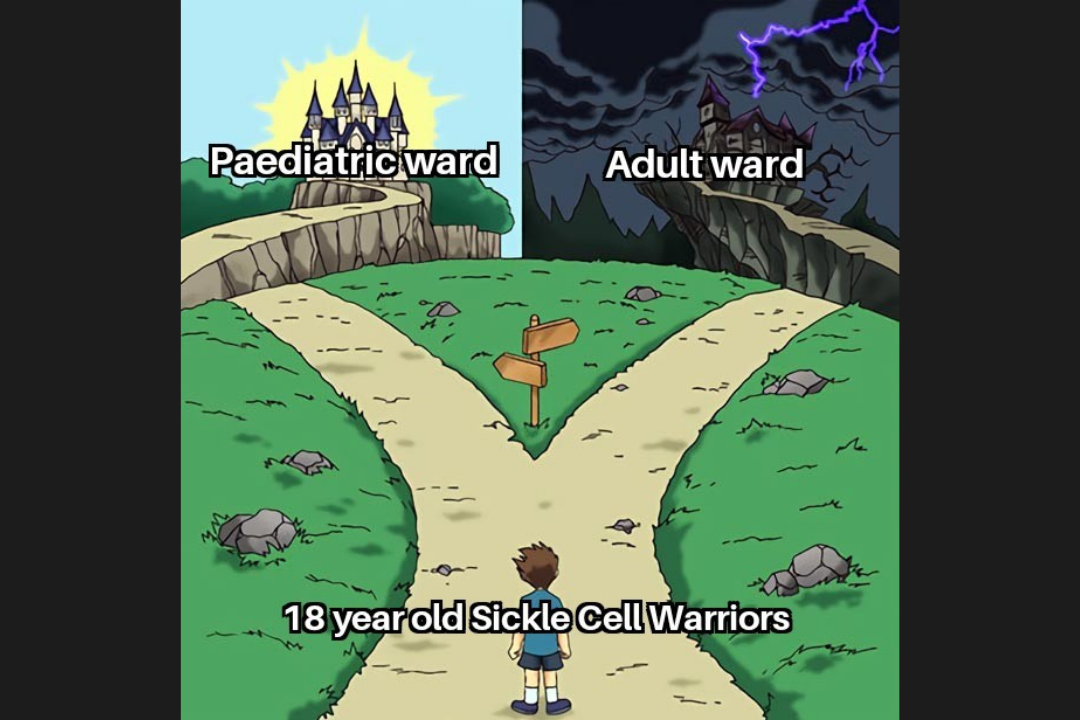

I can tell you having personally experienced the pain of a sickle cell crisis that having any at all is too much!
I'm sure most sickle cell warriors would agree.
The problem is that when you've spent the majority of your life living with recurrent crises it can warp your perspective of normal.
The result?
A couple weeks or months in hospital every now and again becomes your standard.
Holding it together at your 9-5 during episodes of crippling pain is a normal occurrence.
I've spoken to many sickle cell warriors living like this.
Too often it's because no one has ever informed them they have better options.
Sometimes doctors press people too much to try medication. It's off putting because they've not appropriately managed fears and understood health beliefs.
Sometimes doctors might not do enough. For example they ask
"Are you good"
You say "Everything's normal"
And they're like, "Say no more, see you next year."
I'm paraphrasing but I've seen this happen to many patients.
And for sickle cell warriors it leads to them having far more crises than they need to.
The danger with sickle cell isn’t just the pain in the moment.
It’s what repeated crises do to the body behind the scenes over time.
Lets discuss two strategies to establish whether your current number of crises is too much
1. Use specific Criteria
Bone marrow transplant or gene therapy are the highest level treatments available for sickle cell.
They have clear eligibility criteria in different health care systems. They should be offered to warriors experiencing severe symptoms.
However, many warriors who meet these criteria aren't aware and continue to struggle.
For example, in the UK you can have a bone marrow transplant for free on the NHS.
That's if:
Think about this:
Three hospital-level crises in a year is enough to qualify someone for a curative treatment.
Three crises is not 'just one of those years'.
It’s a sign that the disease is behaving aggressively and deserves escalation.
Also if you're having three crises a year and you've still not tried Hydroxyurea then its time to consider it seriously.
2. Organ Damage
This is about what happens during a crisis, not just how often they occur.
You could technically have only one crisis in a year, but if that crisis causes complications like:
Then that one crisis is already too many.
Why?
Because those events represent organ damage.
And organ damage doesn't disappear once the pain settles. It accumulates.
Each severe episode increases the risk of long-term irreversible disability.
And it's that long term mindset that some warriors miss.
It doesn't help if you've been told you won't live past the age of 18 of course. Why concern yourself with long term organ damage if you believe you're days are numbered?
If you take anything from reading this, take a step back.
Zoom out to evaluate whether the number of crises you're having a year could be eligible for further treatment.
Think about the long term health of your organs and take action to protect them.
Assess treatment options with this in mind.
Ask harder questions in clinic
And refuse to normalise a level of suffering or damage that isn’t inevitable.
Stay Healthy
Lewis