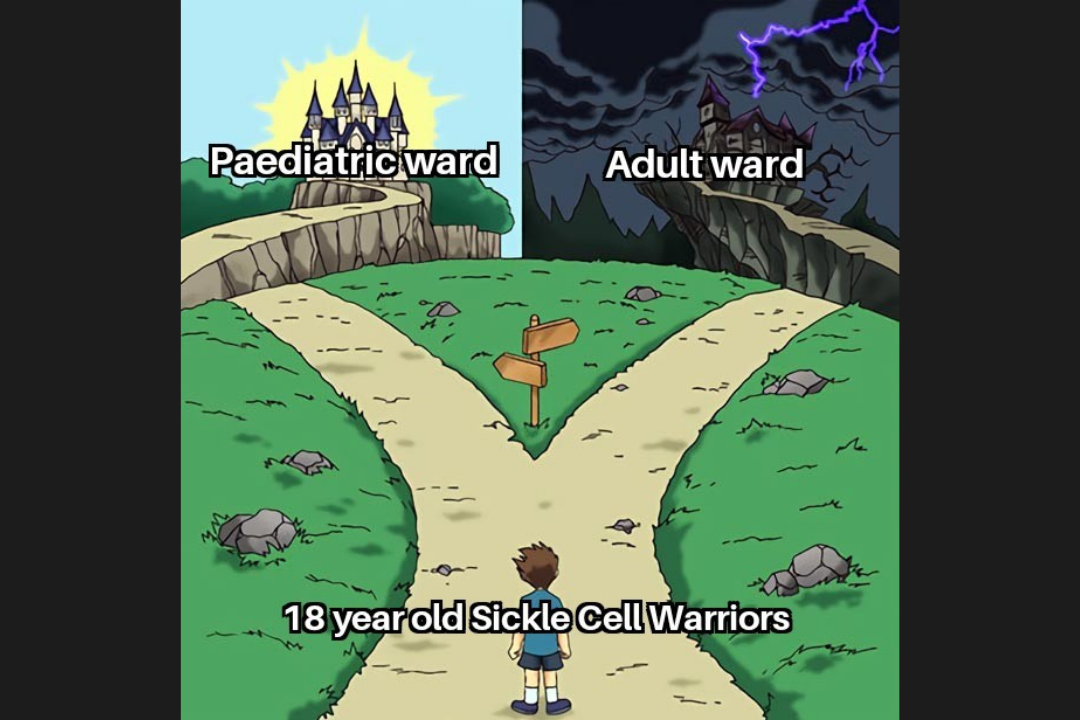

You've dragged yourself to the hospital due to real unbearable pain. And they hit you with this line:
“Your blood tests look fine 🤨 ..."
This has to be one of the most frustrating statements to hear as a sickle cell warrior.
The first time a senior emergency physician said this to me?
If looks could kill he would have been incinerated on the spot!
I don't have time for gaslighting and neither do you.
But I realise it's easier for me to deal with ignorant health professionals like this than it is for you.
Being a doctor myself makes it easier for them to accept that I know more than them.
But without this credibility it takes abit more explaining.
So here's how I would approach this statement.
If you already know this I hope it validates you, if you don't I hope it helps you feel more prepared next time.
-
Here’s the truth - an acute sickle cell pain crisis has nothing to do with your lab results.
Most blood tests look at things like your haemoglobin, white cells, and platelets. They show how many cells are in your bloodstream, not whether those cells are flowing properly.
This is key because a sickle cell crisis isn’t caused by a low haemoglobin - it’s caused by blocked blood flow.
During a crisis, your red blood cells lose oxygen, change shape, and stick together. These clumps get trapped inside the body’s tiniest blood vessels, cutting off oxygen to the body. That’s what creates the deep, bone-aching pain you feel.
But the red blood cells don't suddenly disappear like some doctors want to believe happens.
Think of it like a traffic jam. You can have the same number of cars on the road, but if one junction is blocked, everything stops moving - even though the “car count” hasn’t changed. That’s what’s happening inside your body during a pain crisis.
Your lab numbers might change later if complications like infection develop. But at the start, the crisis pain is happening even while your results look normal.
-
Here's a final thought.
Doctors (particularly emergency physicians) like to be able to diagnose medical conditions based on objective investigations, like blood tests.
For most emergencies this works fine, but not for sickle cell.
Unfortunately medical training doesn't address sickle cell as a special situation.
These doctors don't understand that they have to listen to the patient - not just look at the numbers. Because sickle cell pain is invisible. And unless you have microscopic x-ray vision you can't see it.
It simply comes down to them trusting that you wouldn't be there unless you could feel it.